
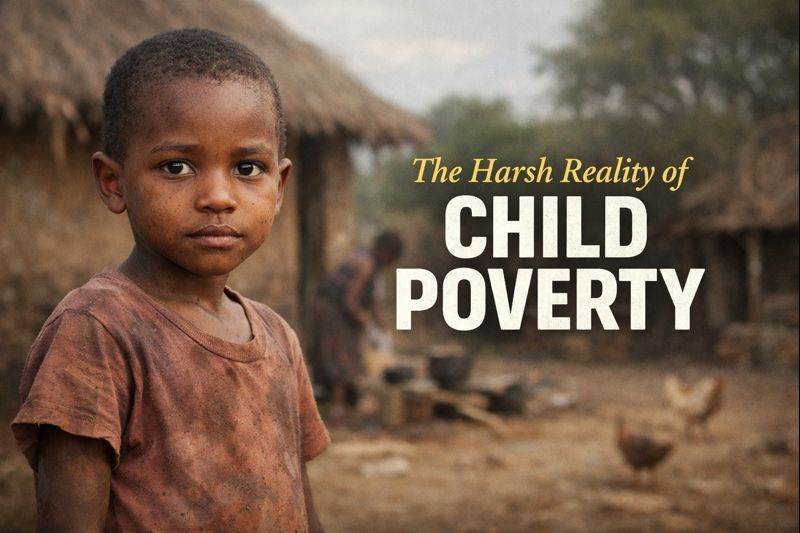
Reading the 2025 Child Poverty in Australia report, I found myself wondering: How often do we actually talk about children living in poverty? Certainly nowhere near as much as we should! Too often, in fact, children in poverty remain on the margins, both within academic research and in practice. Granted, there are studies on child poverty and organisations dedicated to addressing it, but these are not nearly as many as the phenomenon of child poverty deserves. Indeed, child poverty has not been adequately discussed in the conceptualisation, measurement and eradication of poverty, as stressed here and here. When all is said and done, is there an international definition or measure of child poverty? Does your country have a definition of child poverty, and if so, does that definition sufficiently reflect the actual realities of children living in poverty? Welfare agencies dedicated to improving the lives of children do have definitions of child poverty, but how well do these definitions reflect the multidimensionality and complexity of child poverty? How do we account for children living in poverty in well-off households, which is quite common (see here, here and here, for example), and those living on the streets? The answers to these questions are reflected in an unsettling fact: more than half of the people living in multidimensional poverty across the world are children. Thanks to OPHI and UNDP for shining a light on this reality (see here and here). Sri Lanka’s efforts to measure child poverty as a distinct phenomenon are also commendable (see my earlier blog on this here).
Indeed, child poverty is a silent but rapidly unfolding global crisis, and here are some of the key facts on it:
Child poverty is worsening across the globe. As I have blogged here, global poverty is worsening, and so, too, is child poverty. This is confirmed by UNICEF’s 2025 report, State of the World’s Children: Ending Child Poverty –Our Shared Imperative, which warns that increasing numbers of children are at risk of being pushed deeper into poverty due to conflicts, climate change and cuts to development aid. The COVID-19 pandemic has also contributed significantly to the worsening of child poverty, as I discuss in my forthcoming Routledge book chapter, “The Impact of the COVID-19 Pandemic on Global Poverty.”
No country is immune. Poverty is, as I argued in a scholarly article here, now a stark reality in low-, middle-, and high-income countries alike. Child poverty, too, exists in every country, irrespective of income level. It is a reality in Australia, for example, where over 950,000 children experience food insecurity, poor housing and limited access to essential services. In the United States, too, child poverty increased from 5% in 2021 to 13% in 2024 (see more here). Similarly, in the United Kingdom, 1 in 3 children lives in poverty, as reported here.
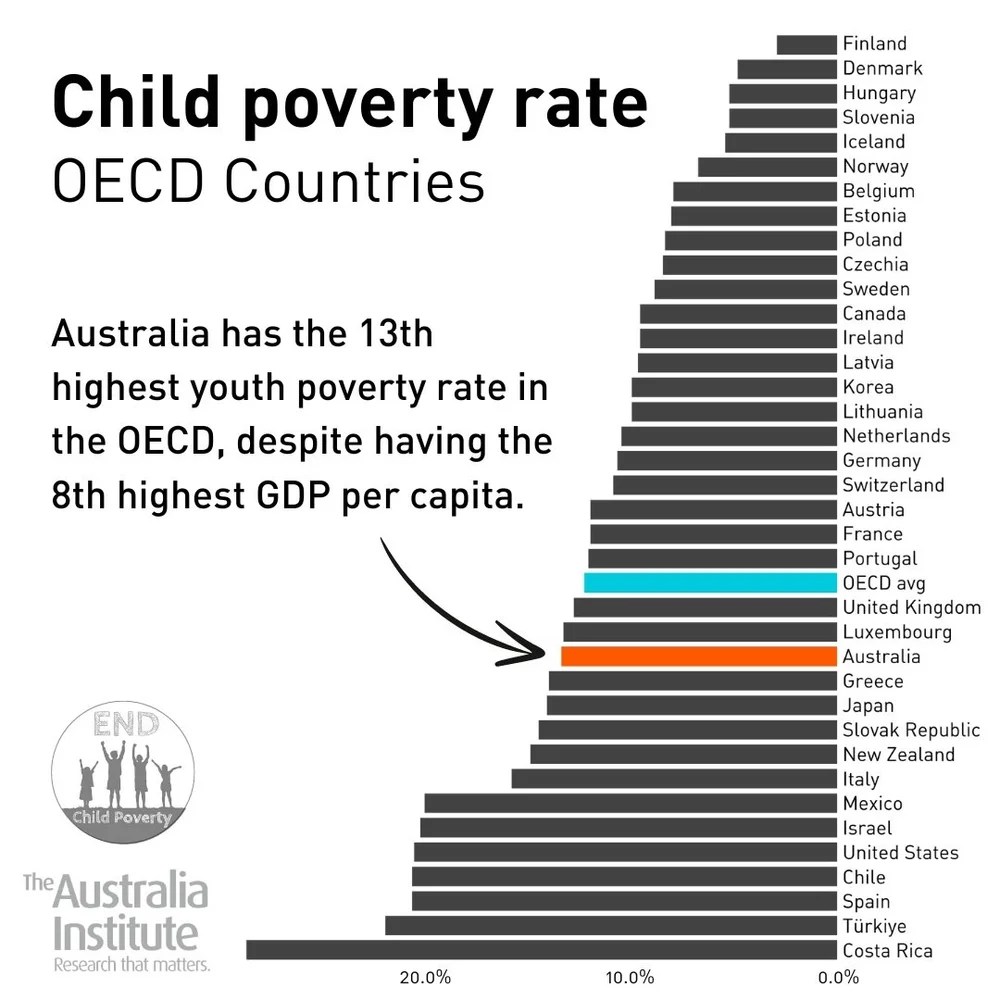
Photo Credit: The Australia Institute
Seasonality: the glaring yet most overlooked form of child poverty: As we discussed in a scholarly article, available on open access here, poverty has a seasonal dimension, which Professor Robert Chambers of the Institute of Development Studies, University of Sussex, termed “seasonality”. This form of poverty, as I have also discussed in a scholarly article here, manifests in all other (financial, economic, material, social, and environmental) poverty dimensions and is characterised by realities that the poor experience repeatedly at certain times of the year, brought about by marked changes of climatic and non-climatic seasons.
Child poverty has a seasonal dimension, too. What is unsettling, however, is that it is one of the most damaging and glaring but least acknowledged forms of child poverty. The wet season is particularly challenging for children living in poverty, especially in rural areas. It is associated with food shortages, leaking roofs, colds and diseases (such as malaria, diarrhoea, and skin infections), and children are often the first to feel the impact. In addition, the back-to-school period, a non-climatic seasonal reality, places a heavy burden on poor households, with children again bearing the brunt of their families’ struggles to raise school fees and meet related expenses. Festival seasons present yet another layer of hardship, during which children in poverty often feel their deprivation most acutely. They usually struggle to enjoy the seasons due to a lack of new clothes, toys or presents and festive food, and the inability to invite friends into their homes – expectations that commonly accompany festivities. In Australia, for example, festival seasons are associated with ‘Empty Fridges’ for children living in poverty, among other challenges (see here for more).

Photo Credit: Bridge Builders Incorporated
What is even more disturbing is that these different forms of seasonality often occur simultaneously. In Zimbabwe, for instance, the wet season coincides with non-climatic seasonal pressures linked to festivities and the back-to-school period (commonly known as “January Disease”). Since all these realities are temporary, they are often excluded from official poverty statistics. As a result, seasonal child poverty is rendered silent and invisible, despite its profound and recurring impact on children’s lives.
Eradicating child poverty is essential to ending poverty. Countries aspire to end all forms of poverty by 2030 (Sustainable Development Goal 1). Even though this goal appears increasingly out of reach, ending poverty is still possible within our lifetime, as I blogged earlier here. That goal will remain elusive, however, unless countries confront child poverty head-on. Poverty is often passed from one generation to the next, and childhood is the period during which this cycle takes root. When child poverty is left unaddressed, it reproduces poverty in the next generation. Poverty in childhood begets poverty in adulthood!
It is therefore time to shine a brighter light on the issue of child poverty. It must be given the distinct attention that it deserves and no longer be allowed to remain hidden. By doing so, we can build a more equitable world for all children, one in which every child has the opportunity to thrive, now and in the future.
 Blessing Gweshengwe PhD