
Sometime in 2019, a colleague in the field of rural and urban (spatial) planning, Jeofrey Matai, and I had a discussion about the escalating rate of peri-urbanisation in Zimbabwe. Most rural areas on the fringes of the country’s established cities, such as Harare, Bulawayo and Mutare, and towns like Chitungwiza and Plumtree have become predominantly urban, as reported here, here and here.
The focus of our attention during the discussion was the question: Where did the cattle go? This question was particularly important for me since I spent part of my life in Domboshava, a peri-urban area of Harare, and engaged in rural livelihoods. I was therefore acquainted with farming and livestock-rearing activities in areas at the height of peri-urbanisation in Domboshava.
Cattle in rural Zimbabwe represent a better quality of life. They constitute a source of income, an investment, collateral security for loans, productive assets (draught power) and provide milk, meat and manure, among other benefits. Accordingly, not owning cattle necessarily signifies a low quality of life. Thus, the ‘where did the cattle go?’ question made us reflect on the quality of life of the original inhabitants of the country’s peri-urban areas that have become more urban.
As argued here, peri-urbanisation can be a blessing or scourge for the original inhabitants of peri-urban areas. It can improve the quality of life of the original inhabitants by affording them access to urban opportunities that attract rural people to the city, or it can make the original inhabitants worse off by disrupting their lives and livelihoods. So, what is the likely effect of peri-urbanisation on the quality of life of the original inhabitants of peri-urban areas in Zimbabwe?
We therefore conducted an empirical study, drawing lessons from Domboshava peri-urban, in a bid to answer the question: How are the original inhabitants of peri-urban areas in Zimbabwe faring in the wake of peri-urbanisation? We wish to express our deepest gratitude to Great Zimbabwe University for funding the study and our Research Assistant, Precious Tayerera, for assisting with data collection. Our findings are published here in the SAGE International Journal of Community and Social Development. In addition to this study, I was recently involved in a poverty study in Mutasa South peri-urban, on the fringes of Mutare, the third largest city of Zimbabwe. This study is set to be published in the “Village and Agriculture” Journal of the Institute of Rural and Agricultural Development, Polish Academy of Sciences. Based on these studies, I observed that:
By and large, peri-urbanisation negatively affects the quality of life of the original inhabitants of peri-urban areas in Zimbabwe. It is more of a scourge than a blessing. In the Domboshava study, for example, the majority (61 out of 80) of the original inhabitants who participated in the study reported a low quality of life. Only two participants reported a high quality of life.
The low quality of life among the original inhabitants of peri-urban areas is mainly attributed to peri-urbanisation. One original inhabitant, for example, stressed that: “life was better before this area (Domboshava peri-urban) became urban.” Similarly, another one said: “life is unbearable of late and this is because the area is now a location (an urban residential area).”
Peri-urbanisation has brought about or exacerbated the realities of the original peri-urban inhabitants. It has, for instance, fuelled or worsened their financial deprivation by displacing their livelihoods and has not created meaningful livelihood alternatives for them. Some original inhabitants have resorted to coping strategies such as vending and hand-stone quarrying in the case of Domboshava.
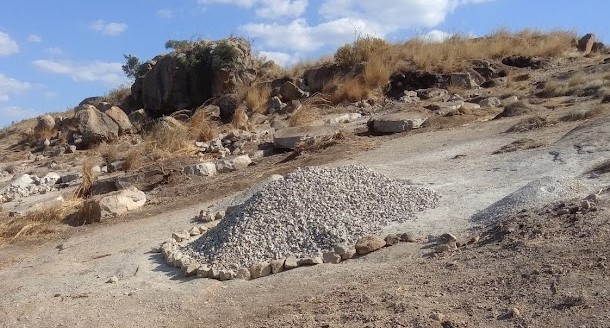
Furthermore, peri-urbanisation has created a cash economy in peri-urban areas. The original inhabitants now need cash for almost every necessity of life, including those which used to be freely available, such as firewood, vegetables and water, This is an inevitable outcome of fully-fledged peri-urbanisation and is not unique to Zimbabwe, as it has also been observed in other countries such as Angola. Moreover, peri-urbanisation has spurred a demand for education, – which has become expensive as a result – and a scramble for places in schools. In addition, peri-urbanisation has worsened seasonal poverty among the original inhabitants. Seasonal realities such as seasonal hunger and water scarcity, back-to-school ‘headaches’ and price hikes of vegetables and tomatoes are now more severe, and some of these realities now occur earlier and last longer than before the areas became predominantly urban.
In the final analysis, peri-urbanisation does indeed adversely affect the quality of life of the original inhabitants of peri-urban areas in Zimbabwe. Most of the original inhabitants struggle to cope with the realities brought about or exacerbated by peri-urbanisation.

