
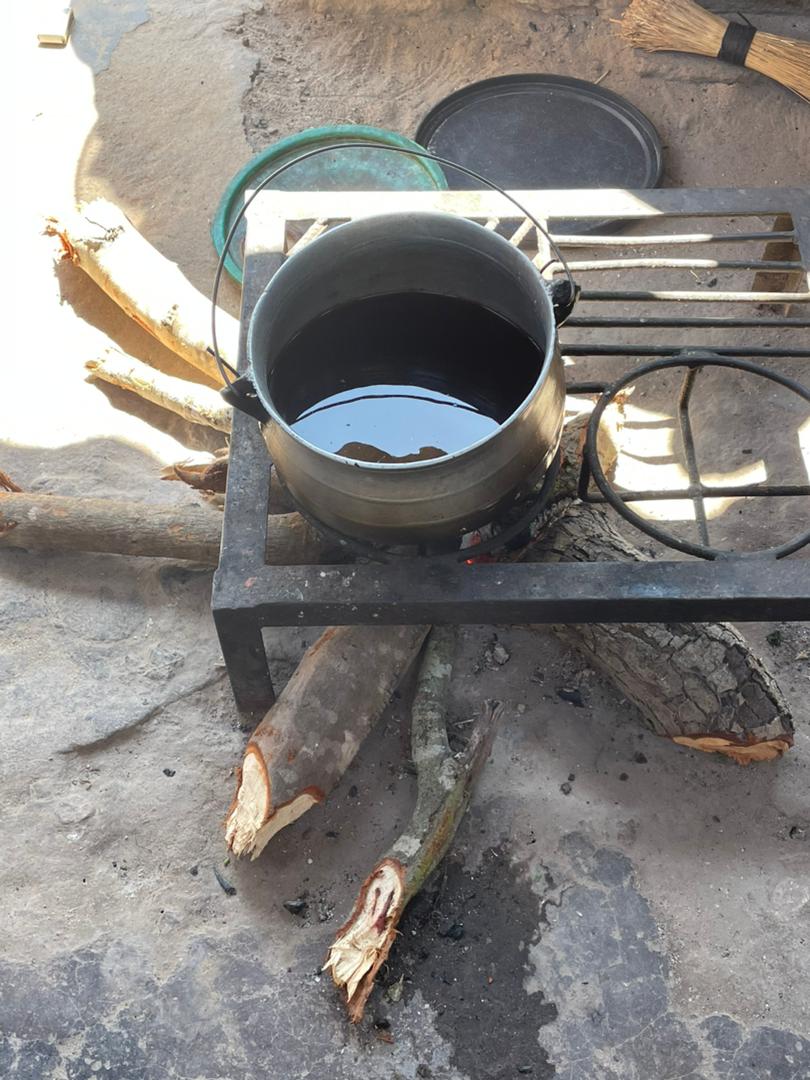
Lack of access to clean cooking (cleaner fuels and efficient cookstoves) is one of humanity’s greatest challenges today. The World Bank reports that 4 billion people worldwide have no access to clean cooking services. This situation is particularly dire in rural areas, where most households use unclean fuels and inefficient cookstoves. In Zimbabwe and Malawi, for example, 95% and 96% of rural households, respectively, depend on biomass fuels (firewood and charcoal). Households in peri-urban areas (as seen here) and urban settlements are also affected, especially those not connected to electricity grids.
Enhancing access to clean cooking has recently become a global development commitment and is crucial for achieving Sustainable Development Goal 7. Across the world, governments, international development institutions such as the World Bank, private companies such as C Quest Capital and NGOs are making a concerted effort to, in the words of the Clean Cooking Alliance, “bring clean cooking to the billions without it”. Hundreds of millions of funds are being committed (see here) to this great cause. Millions of households have been provided with clean cooking services (for instance, see here, here, here and here), and there is an unprecedented determination to reach billions of people without access to clean cooking.
The nexus between access to clean cooking and poverty is clear. Accordingly, enhancing access to clean cooking could significantly contribute to poverty eradication, as mentioned here. Poverty, as we discussed in a scholarly article here, is multidimensional. Enhancing access to clean cooking is critical to eradicating the many and varied dimensions of poverty as it helps to do away with:
Cooking poverty, which refers to the use of unclean cooking fuels (firewood, charcoal, dung etc.) in inefficient cookstoves, such as open fires or three-stone stoves. This is a critical form of energy poverty (as I described in detail here) faced by billions of people around the world. Helping households access clean cooking energy and improved cookstoves therefore enables them to graduate from cooking poverty. Efforts to address this need to be taken swiftly, failing which some 2.4 billion people will still be in cooking poverty by 2030.
Health poverty, which involves health-related realities such as vulnerability to diseases, being sick, low life expectancy, malnutrition and high levels of stress (Gweshengwe & Hassan, 2020). Unclean cooking exposes people to respiratory illnesses, eye ailments, burns and congenital disabilities (as seen here, here and here). Furthermore, the drudgery associated with biomass fuel (esp. firewood) collection damages spines, nerves and muscles.
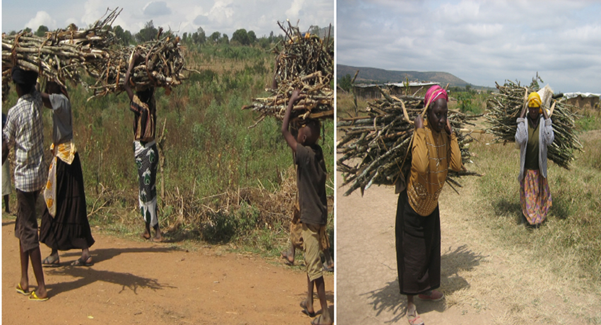
Photo Credit: Mary Njenga https://www.researchgate.net/profile/Mary-Njenga-2
Unclean cooking also shortens lives. As the World Economic Forum reports, it kills silently and slowly: claims the lives of nearly 4 million people every year. Women and children are the most affected.
Having access to clean cooking could contribute significantly to preventing, abating or reversing the negative health impacts of using unclean and inefficient fuels and cookstoves. It improves the health conditions of people, especially that of women and children, as indoor pollution, the risk of burns and drudgery would be meaningfully reduced, and life expectancy would be significantly improved, as explained here and here, for instance. Increasing access to clean cooking would therefore contribute to ensuring healthy lives and promoting well-being for all at all ages (SDG3) by 2030.
Economic poverty, which refers to a lack of access to income-generating and other livelihood opportunities owing to either the unavailability of opportunities or barriers to accessing the opportunities (Gweshengwe & Hassan, 2020). Unclean cooking, particularly the use of firewood and open fire, creates barriers to accessing livelihood opportunities. The poverty of time (too little) and energy (physical exhaustion) make it difficult for people, particularly women, to pursue livelihoods, as Robert Chambers explains here. Unclean cooking therefore fuels both poverty of time and energy as people, mostly women, spend a lot of time fetching firewood and cooking, which are both laborious and fatiguing. It also negatively impacts human capital (good health conditions, knowledge, skills and abilities). As indicated above, unclean cooking causes ill health and shortens lives and, as explained here, children often miss school or get to school late and tired as they are also involved in collecting firewood. This has a negative outcome on human capital.
Clean cooking is instrumental in alleviating economic poverty. As key players in enhancing clean cooking, such as C Quest Capital and Clean Cooking Alliance, opine, clean cooking helps to address barriers to accessing livelihood opportunities. Clean cooking saves time in both cooking and fuel collection (as seen here and here). It therefore addresses the poverty of too little time, creating more time for livelihood pursuits. Clean cooking also preserves body energy which is essential for pursuing livelihood opportunities. In addition, due to the health benefits explained above, clean cooking improves human capital, a key livelihood asset, especially for poor people. Lastly, as explained below, clean cooking saves household income, which could be channelled towards entrepreneurial activities.
Financial poverty, which is defined as a lack of income and savings, and being in debt (Gweshengwe & Hassan, 2020). Unclean cooking, as stressed above, constraints households’ earning capacity, which translates to low income or little opportunity to save. It also siphons households’ meagre income, leaving nothing to save. The use of open fire, for example, makes households spend more on firewood. It is common for households, especially those in urban areas, to borrow money to purchase cooking fuels. This could be significantly reversed by accelerating access to clean cooking. As shared here and here, households with improved cookstoves use less firewood and, as highlighted above, spend less time collecting firewood and cooking. They therefore spend less money on fuels and have the opportunity to generate more money, creating conditions that are conducive for savings and avoiding debts.
Material poverty, described here as the absence of, limited or possession of low-quality household assets (clothing, shelter, furniture, radio, TV etc.) and lack of access to basic services. High spending on cooking, lack of savings and debts, which are associated with unclean cooking, fuel material poverty. Clean cooking, however, helps to create a financial space for households to acquire assets and essential services, enabling them to graduate from material deprivation.
Social poverty, which involves a lack of social capital (networks/relationships), limited or no participation in social activities and an inability to take up socially approved responsibilities (Gweshengwe & Hassan, 2020). Unclean cooking, as highlighted earlier, gives rise to the poverty of time, depriving households of time to socialise and participate in social activities. With time-saving associated with clean cooking, households can build up and strengthen their social capital and partake in social functions.
Environmental poverty, which includes living in unclean homes and deforested areas (as seen in our article here), and this is the case with unclean cooking, which is characterised by significant indoor pollution (soot or black carbon), smoky kitchens, and massive deforestation and land degradation. Enhancing access to clean cooking helps to eradicate environmental poverty, as it produces little or no indoor pollution or smoke and minimises the cutting down of trees for firewood or charcoal (as seen here).
Seasonal poverty, which is characterised by the “realities that people, especially the poor, experience repeatedly at certain times of the year brought about by marked changes of climatic and non-climatic seasons”(as seen in my blog post here). Unclean cooking exacerbates the seasonal realities faced by poor and vulnerable people. In urban areas, for example, we observed in our recent baseline survey in Zimbabwe that prices for dry firewood are somewhat high during the rainy season, since households avoid wet firewood that produces more smoke and increases the cooking time. On top of financial challenges associated with wet season realities (food price hikes, shortage of money etc), households spend more on firewood for cooking. All this could be alleviated by enhancing households’ access to clean cooking, which, as highlighted above, reduces household spending on cooking fuels.
In summary, as the discussion above reveals, access to clean cooking helps to eradicate all forms of poverty. Since the world aspires to end, by 2030, all forms of poverty everywhere (SDG1), accelerating clean cooking could contribute significantly to the realisation of this noble aspiration!
 Blessing Gweshengwe PhD
Prolificacy and landmark scriptions Doc Gweshengwe.
Thank you, Aleck!
Pingback: Is it too late to achieve UNIVERSAL ACCESS TO CLEAN COOKING by 2030? – Blessing Gweshengwe PhD
Pingback: What does the 2023 Global Multidimensional Poverty Index report reveal about global poverty? – Blessing Gweshengwe PhD
Pingback: Why is COP28 crucial not only for tackling climate change but also for poverty eradication? – Blessing Gweshengwe PhD
Pingback: Can African countries make 2024 a turning point in improving access to clean cooking? – Blessing Gweshengwe PhD
Pingback: The 2024 Global Multidimensional Poverty Index Report is out! What does it reveal about global poverty and efforts to eradicate it? – Blessing Gweshengwe PhD
Pingback: Carbon Credits, Rural Gains: Zimbabwe’s New Path to Ending Poverty – Blessing Gweshengwe PhD
Pingback: Poverty’s Stubborn Persistence, Clean Cooking and Climate Change: The 2025 Global Poverty Wake-Up Call that No One Can Afford to Ignore – Blessing Gweshengwe PhD