
Global poverty is on the rise, as I have shared here. Between 2020 and 2023, 165 million people fell into poverty. The achievement of the ‘No Poverty’ aspiration is at risk, as highlighted here, here and here. The 2030 deadline may well be missed, and we may only hope to achieve a world without poverty by the year 2092. Given this state of affairs, it is imperative to think of more appropriate and effective ways to tackle global poverty. This was the theme of the International Poverty Workshop that I participated in last month (September 2023) at The Open University (UK). The workshop was organised by the university’s Centre for the Study of Global Development and the Chronic Poverty Advisory Network (IDS, University of Sussex) in collaboration with the DSA/ EADI Multidimensional Poverty and Poverty Dynamics. The workshop participants – drawn from universities in countries like the UK, Netherlands, Mexico, India and Ghana and organisations with a mission of improving lives, such as Save the Children UK, Give Directly, Young Lives Ethiopia, UK’s Foreign, Commonwealth & Development Office, Asian Development Bank and C Quest Capital – called into question current poverty eradication models/approaches, and proposed new and innovative ways for fighting global poverty. Based on the proceedings of this poverty workshop, today’s blog shares insights on what future poverty eradication efforts need to consider if they are to be successful.
Rebalancing social development for poverty eradication – this was put forth by the first workshop presenter, Vidya Diwakar, the Deputy Director of the Chronic Poverty Advisory Network at the Institute of Development Studies, Sussex. Social development is vital for poverty eradication, but the persistence of global poverty reflects the need to rethink social development in tackling poverty. Findings from the workshop were that conventional social development does not sufficiently take into account economic and environmental factors in alleviating poverty. This makes it less effective since poverty is multidimensional and complex and efforts to eradicate poverty face protracted challenges, most notably climate change. One could not agree more with Vidya on the need to reset social development by sufficiently or meaningfully integrating economic and environmental considerations in poverty eradication efforts.
Participation of communities as equal partners in poverty eradication, rather than just being viewed as beneficiaries
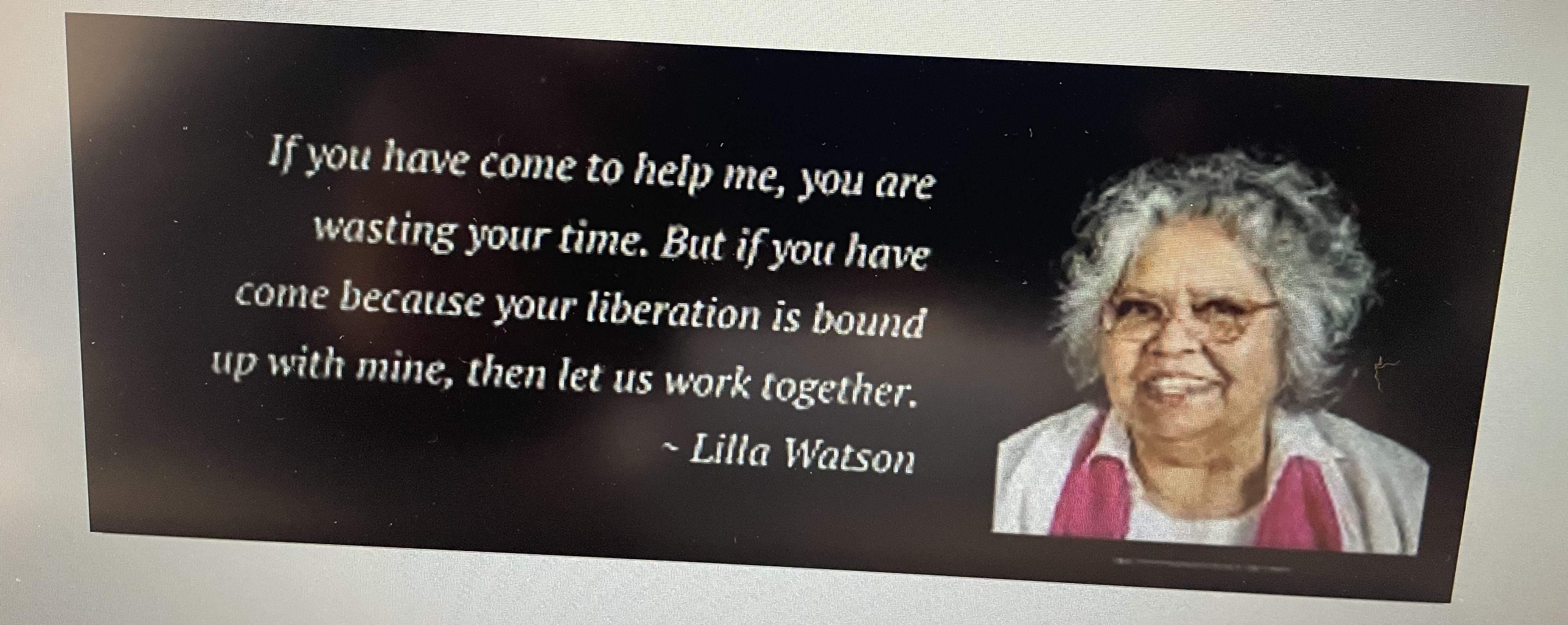
In the fight against poverty, Whose reality counts? to borrow Robert Chambers’ thoughts. Is it that of a few within centres of power (donors, development institutions, professionals and government) or that of many communities on the periphery? It is, for the most part, the reality of a few in centres of power that counts in determining how to eradicate poverty. This contributes to the persistence of global poverty as poor people’s poverty realities are not given due consideration, and their ability to contribute meaningfully to poverty eradication is overlooked. By way of example, as Ian Scoones shared here, what rural communities consider appropriate agricultural mechanisation is not the flashy, expensive equipment displayed at the Global Conference on Sustainable Agricultural Mechanisation held recently in Rome. As I learnt from the workshop discussions, the reality of communities is equally important. Communities possess a comprehensive understanding of the nature and complexity of poverty within their midst. In addition, they can significantly contribute to the design and implementation of appropriate and effective poverty eradication measures. They can also contribute meaningfully to financing poverty eradication efforts. Furthermore, the meaningful involvement of communities in poverty eradication sustains the spirit of ending all forms of poverty. Lastly, community participation is crucial for ‘poverty eradication with dignity.’ Communities therefore need to participate as equal partners, not just beneficiaries, if sustainable poverty eradication is to be achieved.
More focus on addressing digital poverty: The ability to, in the words of Digital Poverty Alliance, “interact with the online world fully, when, where, and how an individual needs to” is vital for preventing or escaping poverty. Do we not have many individuals in our midst who have significantly improved their lives owing to their access to Facebook, Instagram, WhatsApp, TikTok and YouTube, either as content creators or content consumers? What about those who have improved their knowledge and skills by accessing online professional courses, some of which are offered for free by the world’s leading universities? Sadly, a substantial portion of the global population experiences digital poverty. In 2022, 2.7 billion people lacked internet access, and 53% of the world’s population had no high-speed broadband. To achieve sustainable poverty eradication, therefore, it is crucial that future poverty eradication efforts also give more attention to eradicating digital poverty. As I learned from the poverty workshop and shared here, addressing digital poverty has a transformative impact on addressing all other dimensions of poverty.
Rekindling the fight against poverty with a human face: In her presentation on poverty eradication, Keetie Roelen asked: Where has the human face gone? As shared here, the need for cost-effective or affordable and scalable poverty eradication measures has resulted in contemporary poverty measures overlooking the multidimensionality and complexity of poverty, the significance of all kinds of human connections in poverty eradication, and the barriers and discourses that fuel poverty. In order to effectively eradicate poverty, therefore, future anti-poverty programs need to, as Keetie Roelen asserts, uphold human dignity by giving enormous consideration to the heterogeneity of the needs and experiences of people in poverty, all kinds of human relationships or connections and varied poverty narratives.
Investing in Nature-based Solutions for sustainable poverty eradication
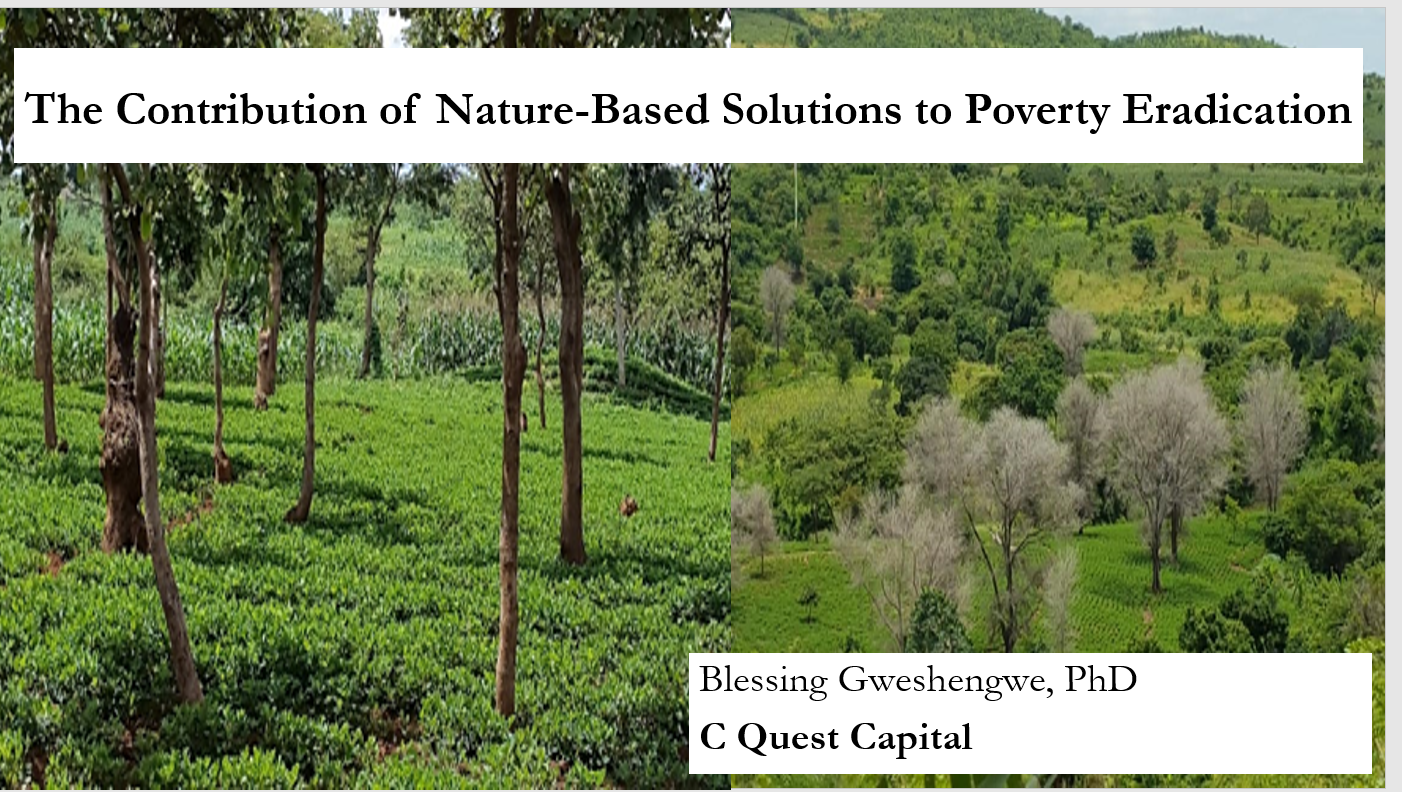
As I argued in my presentation at the poverty workshop, the future of poverty eradication lies, by and large, in Nature-based Solutions (NbS). The International Union for Conservation of Nature (IUCN) defines NbS as measures inspired and supported by nature to address societal challenges such as poverty, simultaneously protecting or restoring ecosystems. NbS include natural regeneration and regenerative agriculture. Based on 16 case studies chosen from the UNDP Equator Initiative NbS database and Hou-Hones et al.’s 2021 report on lessons from the NbS frontline that I examined, NbS could contribute meaningfully to eradicating all forms of poverty. In addition, there are other compelling reasons to leverage NbS for sustainable poverty eradication, namely i) NbS are a solution to the urgent obstacle to poverty eradication: climate change, which could increase by up to 300% extreme poverty in Latin America & the Caribbean by 2030; ii) they ensure the realisation of poverty eradication with dignity and for all. With NbS, people are not simply beneficiaries but active participants in improving their own lives; and iii) there are guaranteed sustainable finances for NbS initiatives. Recently, there has been a rise in funding for NbS through voluntary carbon markets, and NbS are getting the lion’s share of the funds: of the USD 18 billion capital raised between January 2021 and June 2023, more than 80% has been directed towards NbS initiatives. I look forward to sharing more of this based on a Think Piece that I prepared to champion the adoption of NbS for poverty reduction at the scale and pace they deserve.
These, in summary, are my thoughts on the future of poverty eradication, inspired by the thought-provoking discussion we had at last month’s international poverty workshop. As I blog here, I firmly believe in the possibility of ending poverty in our lifetime. Together, you and I have work to do. Let’s make it happen!
 Blessing Gweshengwe PhD
Pingback: Why is COP28 crucial not only for tackling climate change but also for poverty eradication? – Blessing Gweshengwe PhD
Pingback: 10 (Sure) Ways of Losing the War on Poverty – Blessing Gweshengwe PhD
Pingback: Poverty in Australia: My Observations from the 2024 Australian Poverty Report – Blessing Gweshengwe PhD
Pingback: Ending Poverty by 2030 (SDG1) is out of reach, the World Bank says – Blessing Gweshengwe PhD
Pingback: The forthcoming book, ‘Empathy Fix’ by Dr Keetie Roelen, is poised to make a significant contribution to poverty eradication – Blessing Gweshengwe PhD
Pingback: The 2024 Global Multidimensional Poverty Index Report is out! What does it reveal about global poverty and efforts to eradicate it? – Blessing Gweshengwe PhD
Pingback: Now that the COP29 dust has settled, a silo approach to tackling climate change and poverty will not effectively address either challenge – Blessing Gweshengwe PhD
Pingback: Nature-based Solutions: A transformative pathway to ending poverty – Blessing Gweshengwe PhD