

Photo Credit: FINANCIAL Fortune
It is undeniable that the world is facing unprecedented and devastating extreme weather events, such as catastrophic cyclones and relentlessly high temperatures, as reported here and here. 2023 has been the deadliest year on record, marked as it was by extreme weather events that have wreaked havoc: thousands of lives have been lost, millions of people have been left needing humanitarian assistance and millions of properties have been destroyed, as shared here, here and here. The future is even scarier: within the next 5 to 10 years, there will be record-breaking high temperatures, as reported here and here.
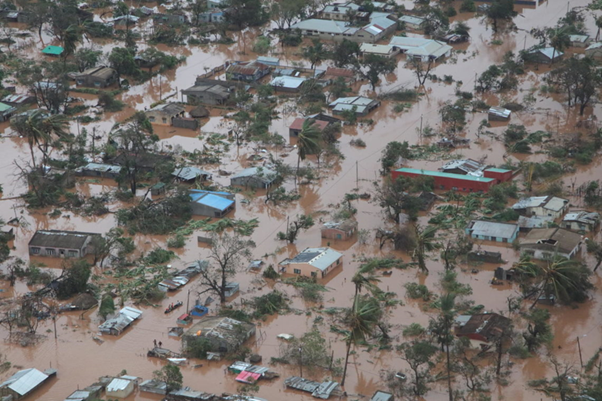
Photo Credit: World Vision
As the threat of climate change looms larger than ever, countries across the globe are stepping up their efforts to combat global warming. They are implementing measures to limit rises in temperature to 1.5 Degrees Celsius by the end of this century and avoid the devastating effects of climate change. Government leaders convene annually to assess, strengthen and renew their commitments to combat climate change at the Conference of the Parties to the UN Framework Convention on Climate Change, commonly known as COP. Significantly, it is not only government leaders who attend COP but also business people, NGOs, climate activists and the big names in politics.
This year’s COP (COP28 UAE) is currently underway in Dubai, in the United Arab Emirates. It is an opportune moment for the world “to make a dramatic course correction”, given the fact that it is, as the 2023 global climate action stocktake report reveals, falling behind in meeting its climate action targets. Since climate change is ravaging a world that is not on track in combating climate change, COP28 is critical not only for assessing and renewing climate action commitments but also for ending poverty. A win in tackling climate change would also be a win in the fight against poverty for two reasons:
Firstly, climate change is aggravating poverty and will inevitably continue to do so. Climate change is preventing individuals who are already poor from escaping poverty, with many being pushed deeper into poverty, as they are the most affected by it [climate change] due to their limited ability to cope and adapt. Moreover, climate change is plunging more and more of the near-poor into poverty. Indeed, as the World Bank reports here, climate change is a serious hindrance to poverty eradication: not only is it reversing poverty eradication gains, but it is also making the very process of poverty eradication more expensive. If the world fails to combat climate change, poverty will continue to worsen, as reported here and here. Millions of poor people will either become trapped in poverty or be forced into extreme poverty. Furthermore, tens of millions of people will be pushed into poverty, as the United Nations reports here.
Secondly, climate change is one of the major causes of environmental poverty. Poverty, as we argue in a scholarly article (freely accessible) here, is multidimensional and includes an environmental dimension. Environmental poverty refers to “a lack of the healthy environment needed for society’s survival and development” and is a result of not only human-induced environmental degradation but also climate change. The effects of extreme weather events, which include floods, droughts and wildfires, destroy the environment, making it uninhabitable by both humans and wildlife. As we demonstrate in the article mentioned earlier, environmental poverty interconnects with and reinforces, or is reinforced by, other forms (such as financial, economic, social and material) of poverty. Taking action against climate change therefore implies eradicating environmental poverty, and this is crucial to eradicating other forms of poverty.
Given that climate change has become increasingly severe in terms of its occurrence and impact on poverty, a win for poverty eradication is no longer guaranteed by solely focusing on combating climate change, hoping that the measures will translate to significant poverty eradication. A three-pronged approach is therefore required.
First, adopting measures that tackle climate change while simultaneously eradicating poverty: Nature-based Solutions are examples of such measures, as I discussed in a blog post on the future of poverty eradication here. Enhancing access to clean cooking is another measure that ensures a dual victory of combating climate change and eradicating poverty, as I shared here. Indeed, the manufacturing sector, especially that in rich countries, is the major emitter of greenhouse gases; however, we should not underrate the contribution of unclean cooking (the use of firewood and charcoal and inefficient cookstoves), which is rampant in poor countries. As the Clean Cooking Alliance clearly breaks down here, unclean cooking is responsible for more than 50% of black carbon emissions, which are the second largest contributor to climate change after carbon dioxide, and virtually 34% of unsustainable wood fuel harvesting.
Second, fighting climate change with a human face or, as C Quest Capital passionately puts it, a human heart: After all, in the words of Professor Robert Chambers (a famous international development guru), “Whose reality counts?” If poverty eradication is to win, the aspirations, needs and experiences of vulnerable and poor people, especially women and children, who are hit first and the hardest by climate change, should count as much as those of world leaders, business people, activists, NGOs and politicians. Actions to fight climate change should directly benefit ordinary people, especially the poor and vulnerable. The actions should also uphold people’s dignity by acknowledging and taking into account the heterogeneous nature of their needs, voices, experiences and relationships or connections.
Third, unlocking funding to address the impact of climate change on poverty: As highlighted earlier, climate change is making poverty eradication efforts more and more expensive. Unfortunately, there has been an alarming decrease in aid, and governments are grappling with high national debts, and this is threatening countries’ capacity to deal with the effects of climate change on poverty. For this reason, sufficient and sustainable finances need to be availed for development efforts intended to address or minimise the impact of climate change on poverty levels and severity.
As discussions take place at COP28, it should be acknowledged that this event is equally important for the discussion of poverty eradication. Aspects of poverty should, therefore, also be brought to the fore. It is encouraging that countries have made a breakthrough in establishing the Loss and Damage Fund, that world leaders have signed a Food Sustainability Declaration and that the International Energy Agency’s call for action on universal access to clean cooking has been loud and clear. As COP28 progresses, I am eager to learn more about commitments made to adopt climate actions that simultaneously tackle poverty, combat climate change with a human face or heart and unlock funding in order to mitigate the impact of climate change on poor and vulnerable communities.


Pingback: Now that the COP29 dust has settled, a silo approach to tackling climate change and poverty will not effectively address either challenge – Blessing Gweshengwe PhD
Pingback: Poverty’s Stubborn Persistence, Clean Cooking and Climate Change: The 2025 Global Poverty Wake-Up Call that No One Can Afford to Ignore – Blessing Gweshengwe PhD