
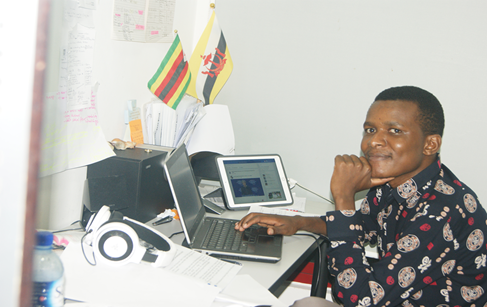
Armed with an undergraduate degree from the University of Zimbabwe and a Master’s degree from the esteemed Institute of Development Studies of the University of Sussex in the United Kingdom, it was clear to me that pursuing a PhD on poverty in an Asian context would be immensely valuable in my journey to becoming a Poverty Specialist. I was sure that studying poverty in Asia would broaden my understanding of poverty beyond my African experiences and what I had learnt in the United Kingdom. Late in 2013, I came upon the Universiti Brunei Darussalam’s Graduate Research Scholarship and promptly submitted my application to pursue a PhD on poverty in Cambodia. My scholarship application was successful, and I enrolled for a PhD in Geography in January 2015. Barely three months into studying poverty in Cambodia, I discontinued and embarked on a study of poverty in Brunei Darussalam instead. This change was necessitated by two factors. Firstly, a discussion about the urgent need to explore poverty in Brunei that I came upon by chance one afternoon in the corridor of the Universiti Brunei Darussalam’s Department of Geography, Development and Environment. Upon digging deeper, I discovered that the discussion extended, and still does, beyond the department to the broader Bruneian society, as seen here, here, here, here and in my median blog post here, for example. Secondly, one of my supervisors expressed concerns about my expedition to Cambodia, a country with which I had no prior experience, to explore poverty and about me venturing ‘Into the Unknown’, to borrow the words of the renowned Professor Robert Chambers.
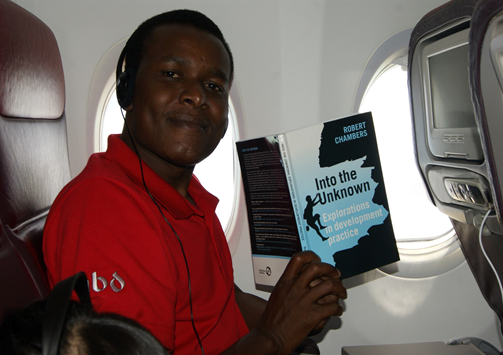
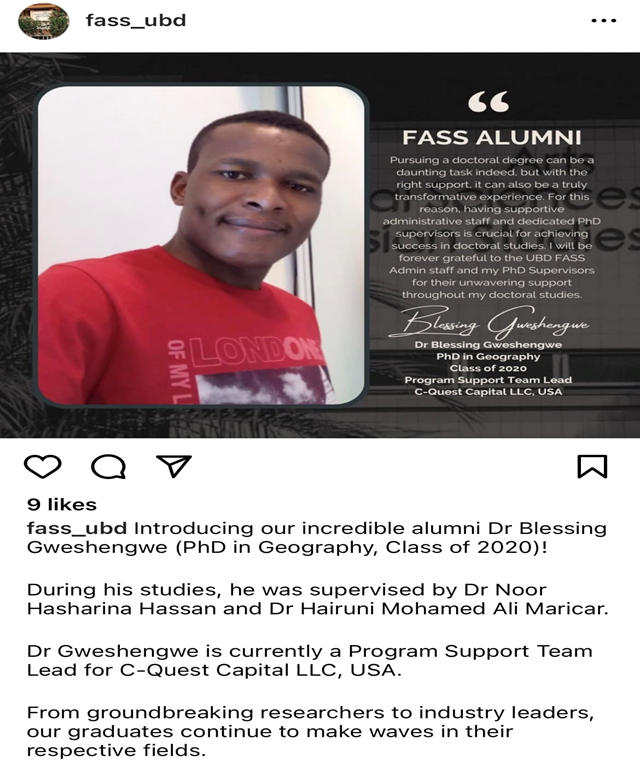
I successfully completed my PhD in May 2018 and graduated in 2020. I am extremely grateful to the Government of Brunei Darussalam, which provided the scholarship through the Universiti Brunei Darussalam (UBD). I also owe my success to the unwavering support of the UBD administrative staff, my supervisors – Dr Noor Hasharina Hassan and Dr Hairuni Mohamed Ali Maricar – my research assistants, various governmental and non-governmental welfare agencies, grassroots leaders and households that participated in the study.
My PhD research on poverty in Brunei has received considerable attention from my peers, fellow professionals and researchers, who often ask: How did you, all the way from Africa, end up studying poverty in an Asian country, Brunei? What question(s) did you address in your PhD on poverty in Brunei, and what were your findings? What was your experience of conducting PhD fieldwork in Brunei? What are the output and impact of your PhD research? Since I have already addressed the first question above, I will now address the remaining questions, along with whether or not I gave up completely the study of poverty in Cambodia and how I feel about my PhD.
What question(s) did I address in my PhD study on poverty in Brunei, and what were my findings?
Brunei, as I blogged here, aspires to attain a zero-poverty status by 2035, which means that none of its citizens should be in any form of poverty by the set deadline. Significantly, this admirable ambition not only aligns with Sustainable Development Goal 1 of ‘No Poverty’ but also with the country’s Quality of Life goal of being amongst the top 10 countries in the world with the highest Quality of Life by 2035. Success in eradicating poverty in any society, however, depends primarily on how much we know about poverty in that society, just as the key to successfully treating any ailment lies in making an accurate diagnosis. Unfortunately, not much is known about the nature of poverty in Brunei. In responding to the question ‘What does poverty mean in Brunei?’, for instance, some Bruneians said:
“When we say someone is poor [in Brunei], we always have this assumption on our mind: that someone does not live like other people…we really do not know who actual poor people are … we make a lot of assumptions, let us find out what poverty means…”
“In this country, we do not fully understand the real meaning of poverty…”
My doctoral research, therefore, sought to understand the nature of poverty in Brunei by analysing its language, meanings, root causes, dimensions, and classification. The specific research questions that the doctoral research addressed were: “What is the language of poverty in Brunei, and why does it (the language) matter? What does poverty mean in Brunei, and does the meaning vary between urban and rural (the interior) areas within the country? What causes poverty in Brunei, and do these causes vary between urban and rural areas? If Poverty is a multidimensional and complex phenomenon by its very nature, how multidimensional and complex is poverty in Brunei? Since people living in poverty are commonly categorised as ‘very poor’, ‘poor’ and ‘near-poor or vulnerable’, what do these poverty clusters mean in Brunei? Answers to these questions are found in my maiden blog post here, as well as our publications, whose links are shared later in this blog post and in my doctoral thesis, which is deposited in the UBD library. Unfortunately, my PhD thesis is not available online at this time, but we have just completed a book based on the thesis. Do look out for this book as it not only addresses the questions above but also the following ones: How poor are the poor in Brunei, and do the descriptions vary between urban and rural areas of the country? Who is vulnerable to poverty in the country and why? What are the poverty myths held in Brunei, how far true are they, and do these myths affect one’s understanding of poverty in Brunei? In this book, we also present nine (9) compelling reasons why we firmly believe that Brunei can end poverty and seven (7) suggestions on how to expedite ending poverty in the country.
What was my experience of conducting PhD fieldwork in Brunei?
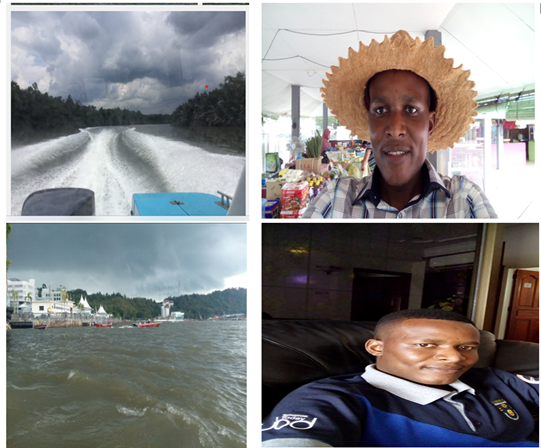
My PhD fieldwork was a surreal experience, filled with curiosity and love. Brunei has a culture and level of development that differ significantly from that of my own country, Zimbabwe. Notwithstanding, I managed to successfully complete the fieldwork, a fact which was acknowledged by one of my PhD Qualifying Examiners, who noted:
“The fact that he is able to carry out data collection in an environment different from his own cultural environment is amazing.”
The success of my PhD fieldwork is attributable to the wholehearted support received from the Bruneian Ministry of Home Affairs, District Offices and, as mentioned earlier, governmental and non-governmental welfare agencies, the UBD FASS administrative staff, my PhD supervisors, the research assistants, grassroots leaders and household respondents. I express my most profound appreciation to them all for their invaluable contributions to the accomplishment of my fieldwork.
Of the multiple factors that drove my curiosity, four in particular stood out:
- Brunei is a wealthy country; its GDP in 2022 was USD 16.68 billion (World Bank). As I blogged here, the country has a very high level of human development and achieved the United Nations’ Millennium Development Goals of having extreme poverty and hunger long before the 2015 deadline. Since the very evident manifestations of poverty, such as malnourished and homeless children or people, are non-existent in the country, I was curious to know exactly what type of poverty Brunei aims to eradicate by 2035. For this reason, I was keenly interested in gaining insight into poverty within the country, as per the research questions I shared earlier.
- Although the realities of the poor vary between urban and rural areas (Ali-Akpajiak & Pyke, 2003; Gweshengwe et al., 2020), this does not seem to apply to wealthy countries in the global north, as Shucksmith et al. (2009) argue. For this reason, I was curious to know whether there are any urban-rural differences in the realities faced by the poor in Brunei, a rich country in the global south.
- As I was preparing for fieldwork, I came across beliefs prevalent in Bruneian society that poverty in Brunei is unique, as some of the people considered to be poor earn a reasonably high income, live in well-built houses and drive beautiful cars; that poverty within the country is relative; and that mindset is the chief driver of poverty in Brunei. For this reason, I was curious to learn how true these beliefs were. Poverty beliefs or myths can have a negative effect – as argued here, here and in this book – on our understanding of poverty in society, and this, in turn, can affect the effectiveness of poverty eradication efforts. I was, therefore, also keen to explore how the commonly held poverty beliefs in Brunei affect an understanding of poverty within the country. Before you learn about my findings on the claim that poverty in Brunei is relative, I encourage you to take a moment to read, here, my thoughts on relative vs absolute poverty.
- As I blogged here, I strongly believe that achieving ‘No Poverty in Our Lifetime’ is possible. Nonetheless, I am cognisant of the fact that achieving this noble goal can be difficult and can take time, and I shared here ten (10) ways in which we could actually undermine efforts to combat poverty. I was, and still am, impressed and encouraged by Brunei’s commitment to achieving zero-poverty status by 2035. Thus, I was also curious to explore what could make it possible for Brunei to eliminate poverty by 2035 and what should be done to expedite this process.
One of the most cherished memories of my PhD fieldwork in Brunei was the genuine warmth and kindness extended to me by members of the Bruneian community. Honestly, I felt pretty apprehensive about the prospect of undertaking PhD fieldwork in Brunei. As a foreign student from Zimbabwe in Africa, I was not sure if I could pull it off. Despite my initial concerns, I was pleasantly surprised to be warmly and graciously received by the Bruneian community, even in the more remote (interior) areas. In my first days of fieldwork, I instantly felt a sense of belonging and was completely at ease. Indeed, I felt very much at home! I received various forms of assistance, including encouragement, translation services, accommodation in Temburong, tea/juice during interviews, and transportation in big cars to areas where our Mazda 3 or Suzuki Ignis could not possibly take us!
Of the many hilarious memories from my fieldwork, one that always comes to mind is that which occurred during a visit to one of the interior/rural areas. When my research assistant was busy with the interview, a household member consistently inquired, in Malay, if I: “minum minum” (would like some more juice). Unable to signal that I had had enough, I ended up with a stretched bladder. For this reason, ‘minum minum’ became one of the Malay phrases that I will not forget very quickly.
My fieldwork experience left me with a profound appreciation of the hospitality and kindness of the Bruneians. I now consider the country my second home, where I am affectionately known by the names ‘Rahmat’ in the Malay community and ‘Zhu Fu’ in the Chinese community, both of which mean ‘Blessing’.
What are the output and impact of my PhD research on poverty in Brunei?
I have published 7 scholarly articles. Of these, 2 were derived from my doctoral thesis, while the other 5 were influenced by my doctoral research in general. In addition, and as shared earlier, we have developed a 10-chapter monograph based on my PhD research. Shared hereafter is the list of the scholarly articles:
- Defining the characteristics of poverty and their implications for poverty analysis, published by Taylor & Francis’ Cogent Social Sciences journal and freely available here, is part of my PhD literature review. It is a product of my frustration with fragmented literature on the characteristics of poverty, which I blogged about here. The article has been quite successful, having garnered more than 48 000 views/downloads and 61 citations since its publication in 2020.
- Perceptions of the language and meaning of poverty in Brunei, published by SAGE’s Journal of Asian and African Studies here, examines the language and meaning of poverty in Brunei, and sheds light on some of the local beliefs about poverty within the country.
- Understanding Quality of Life in Brunei Darussalam, also published by Taylor & Francis’ Cogent Social Sciences journal and freely available here, examines the conceptualisation of Quality of Life (QoL) by the Government of Brunei and what a high QoL means within the country, among other aspects.
- Knowledge to Policy: Understanding Poverty to create policies that facilitate Zero Poverty in Brunei Darussalam. This article, published by Southeast Asia: A Multidisciplinary Journal and freely available here, examines the knowledge on poverty in Brunei required to eradicate poverty in the country.
- Poverty and Microfinance in Brunei Darussalam by Rose Abdullah, a book review of the only academic book available on poverty in Brunei. This article was published by SAGE’s International Journal of Community and Social Development and can be accessed here.
- The Regional Comprehensive Economic Partnership (RCEP) and ASEAN Sustainable Development Goals, a book chapter published by Bentham Science Publishers and available here, addresses the question of whether the RCEP can contribute meaningfully to the achievement of SDG 1 (No Poverty) within the ASEAN region.
- A Critique of the Income Poverty Line and Global Multidimensional Poverty Index, also published by Southeast Asia: A Multidisciplinary Journal here, is a product of the observation made in my PhD literature review that the extensively and commonly used poverty measures – the Income Poverty Line (IPL) and the Global Multidimensional Poverty Index (Global MPI)) – are not perfect. Since there is no perfect poverty measure, an effective one should be, at the very least, imperfect. Thus, this article analyses the degree of imperfection of the IPL and Global MPI.
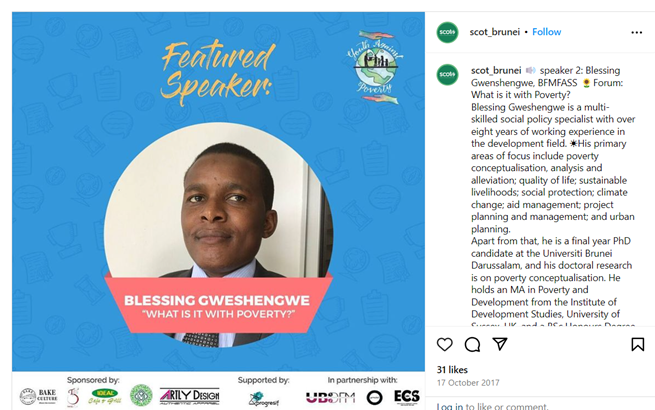
My PhD research has proven to be of significant value within and beyond Brunei. Within Brunei, for example, I was invited to speak about poverty conceptualisation at a 2017 Youth Against Poverty National Workshop, organised by the Society for Community Outreach & Training, a youth organisation committed to contributing to poverty eradication within the country.
I was also invited by BANTU, a Bruneian social enterprise, to share my expertise on its poverty eradication efforts in the country. I contributed to the development, implementation and evaluation of its Baitu Amanah programme, which seeks to help eradicate child deprivation in Brunei. I also led the development of the BANTU Household Deprivation Matrix, which I incorporated into my PhD thesis and our book. I also had the opportunity to participate in a Food Drive initiative, whose effectiveness towards poverty eradication in Brunei I blogged about here. I was, moreover, invited to train volunteers and interns for BANTU and LaVida (a Bruneian NGO) on poverty conceptualisation and how to conduct a deprivation analysis in Brunei.
I also had the privilege of presenting at a 2016 Brunei-Malaysia Forum, organised by the Universiti Brunei Darussalam and Universiti Malaya of Malaysia. I presented a paper on poverty measurement, and this presentation was featured in the Universiti Brunei Darussalam’s Faculty of Arts and Social Sciences news here.
Our ‘Defining the characteristics of poverty’ publication from my PhD thesis shaped an X (formerly Twitter) discussion about the conceptualisation of poverty in Indonesia and has been helpful to university students in countries like South Africa and Zimbabwe; see more about this in my blog post here. It was also featured in a blog post about the language of poverty by Dr Keetie Roelen, a poverty researcher at the Open University in the United Kingdom. The more than 48 000 views/downloads and 61 citations of this publication since 2020 reflect its value to many poverty researchers and practitioners.
Did I give up completely on studying poverty in Cambodia?
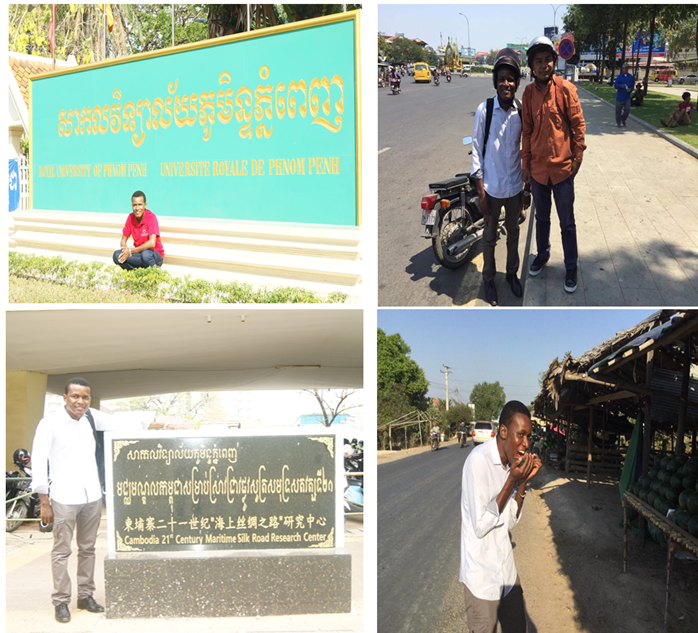
Absolutely not! I later conducted a comparative study of seasonal poverty in Cambodia and Zimbabwe, which is published here. I also covered poverty in Cambodia in my book chapter on the Regional Comprehensive Economic Partnership and ASEAN Sustainable Development Goals. Moreover, I reviewed Ian Scoones’ Sustainable Livelihoods and Rural Development book for The Royal University of Phnom Penh’s Cambodia Journal of Basic and Applied Research. My review article is available here. I was appointed as a member of the International Editorial Board for the same journal. In 2017, I visited Cambodia, and I am grateful to my mentor, Dr Serey Sok, a Livelihoods Researcher at The Royal University of Phnom Penh, and my Cambodian brothers, Dimang Chhann and Noup Meanith, for their hospitality.
How do I feel about my PhD?
- Thankful to God for the PhD opportunity and for giving me the courage and drive to explore uncharted territories.
- Proud of myself for earning a PhD from the Universiti Brunei Darussalam, a premier university of Brunei, despite my humble beginnings in a rural village in Zimbabwe.
- Highly confident in my ability to carry poverty studies in any given context or environment.
- Inspired by my ability to undertake a doctoral study and achieve excellent results, as evidenced in the following comments by my PhD thesis examiners:
“Understanding poverty in Brunei Darussalam is definitely a praiseworthy piece of work” (PhD thesis Examiner 1)
“This is, in many respects, a well-formulated thesis which has been carried out with energy and determination” (PhD thesis Examiner 2)
I would like to sign off by conveying my heartfelt gratitude to Tuan Faiz Zul Hamdi Ahmad, my Principal Research Assistant, for playing a crucial role during and after my PhD fieldwork. We had numerous chats about the research and fieldwork experiences on the balcony of Tower 2.1, The Core Residential Area, and in UBD car parks. To the hilarious Khairi, thank you for the assistance and delicious barbecued meat from your business that you generously provided us with. I am honoured to now call Tuan Faiz and Khairi my Bruneian brothers. I would also like to extend my sincere appreciation to my research assistants: Hafizah, Mahrina, Faith and Janet, and to my translators for their invaluable contributions towards my PhD research. As to other individuals whom I cannot mention by name, Terima Kasih / Xie Xie (Thank You)!
 Blessing Gweshengwe PhD
Pingback: What does the scholarly article ‘…Poverty from above and below in Brunei Darussalam’ say about poverty eradication in Brunei? – Blessing Gweshengwe PhD
Pingback: Advancing Poverty Eradication: Reflections and My Priorities for 2026 – Blessing Gweshengwe PhD