
In my efforts to contribute to poverty eradication, I have heard stories of large sums of money being given to the poor and considerable support for livelihoods as a strategy for eradicating poverty. I have also witnessed significant investments in education, which is regarded as a key solution to poverty. I have observed, too, many organisations and individuals treating jobs as a guaranteed escape route from poverty. Yet, despite all these efforts, poverty persists. And why is this so? Because the poverty worldview is wrong. And if the poverty worldview is wrong, no amount of resources will end poverty, as I blogged previously here.
Indeed, the worldview (lens) through which poverty is defined or interpreted matters as much as – if not more than – the resources needed to eradicate it. For the most part, poverty is construed through the income, basic needs and capability worldviews. The income worldview interprets poverty as a lack of income; the basic needs worldview defines poverty as a lack of basic needs; while the capability worldview interprets poverty as a lack of basic capabilities (opportunities or real freedoms) that one needs to achieve functionings (‘beings’ and ‘doings’). You can learn more about these poverty worldviews in our scholarly article found here.
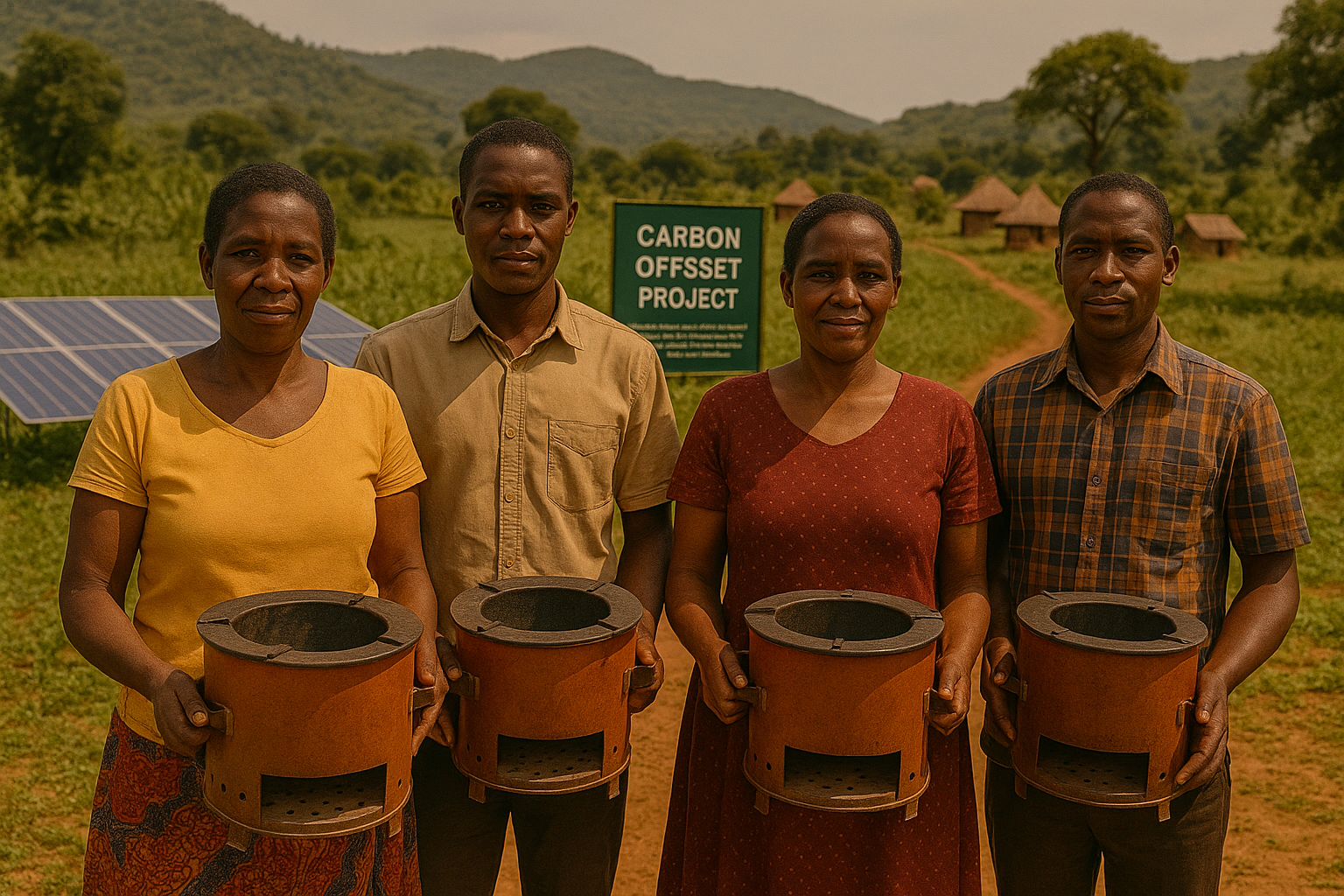
Carbon projects (clean cooking, Nature-based Solutions, renewable energy, etc.) undoubtedly hold enormous potential to contribute to ending poverty in all its forms, as I have previously blogged here and demonstrated in my recent Springer Nature article, which is available here. This potential, however, risks remaining unrealised unless it is grounded in the right poverty worldview.
If carbon projects are rooted in the income worldview, then addressing a lack of income becomes the ultimate goal. National poverty lines and the international poverty line of $3.00 per person per day would serve as the yardstick to identify who is poor in a community and to assess how much a project contributes to ending poverty. The number of jobs created and the rise in household income through wages and cash payouts would often be indicators of a project’s contribution to poverty eradication. Approaching poverty in carbon projects in this way would mean missing the opportunity to fully harness their power in the fight against poverty. Admittedly, addressing a lack of income matters, but it rarely translates to sustainable poverty reduction. Poverty is inherently multidimensional and complex, as we explained in our open-access scholarly article found here. Tackling income poverty alone could be easily undermined by other poverty dimensions (economic, material, social, environmental, and seasonal), which not only interconnect with and reinforce income poverty, but also reinforce one another. In addition, creating jobs does not automatically guarantee poverty reduction, as the reality of the ‘working poor’ reveals. What is more, financial poverty has so many layers to it that are often overlooked by those who subscribe to the income poverty worldview.
When carbon projects are grounded in the basic needs worldview, the ultimate goal becomes enabling people experiencing poverty to meet their basic needs, such as food, shelter, clothing, education and so on. In this worldview, the poor are, for example, those who go hungry, live without decent shelter and cannot access education. Carbon projects would therefore report their contribution to poverty eradication in terms of, for instance, the number of households now eating three meals a day, living in decent shelter and enrolling or keeping children in school. Approaching poverty in this way with carbon projects would also limit their potential to contribute to eradicating poverty in all its forms. Poverty, as highlighted earlier, is complex and multidimensional; it is more than just a lack of basic needs, and carbon projects could rise to that bigger challenge.
Income helps. Basic needs matter. But only the capability worldview is able to unlock the true potential of carbon projects to contribute to eradicating poverty. Unlike other poverty worldviews, the capability worldview acknowledges “the many ways in which human lives can be blighted” and the complexity that this entails. It focuses, moreover, on what truly matters to people: the ability to live lives free from any form of deprivation. Poverty eradication, through this lens, would involve building or expanding the basic capabilities (opportunities or real freedoms) that allow the poor to live the kind of life they value (functionings). Basic capabilities could be broadly categorised as financial, economic, material, social and environmental in nature, and building or strengthening these capabilities also helps communities to cope with seasonal poverty. There is no doubt that carbon projects could help to build or expand basic capabilities.
In conclusion, carbon projects could either help to end poverty or they could miss the mark entirely. The issue lies in the worldview. Unless these projects are rooted in the capability worldview, their full potential to contribute to poverty eradication may not be fully realised. The real question, however, is how to adopt a capability worldview in undertaking carbon projects to achieve genuine poverty eradication. And that is the question I will address in the future.
 Blessing Gweshengwe PhD