
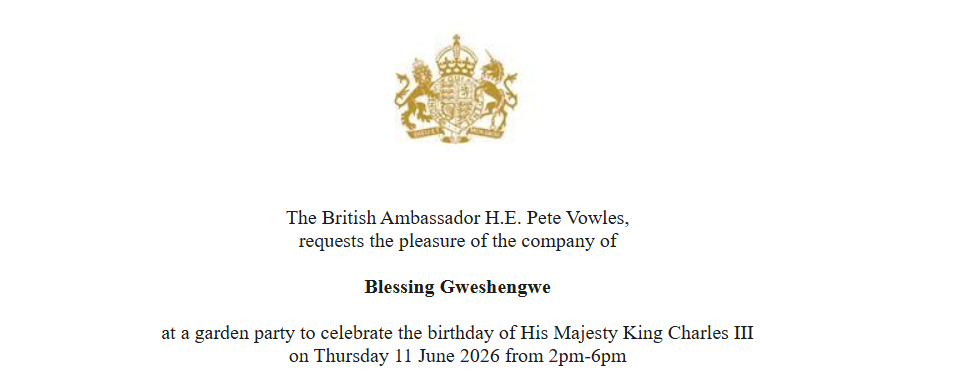
Last week, I was privileged to be invited by British Ambassador Pete Vowles to celebrate King Charles III‘s Birthday at the Ambassador’s Residence in Harare. This marked the third time I had been invited to this prestigious diplomatic event (see here for my reflections on previous King’s Birthday celebrations), for which I remain deeply grateful.
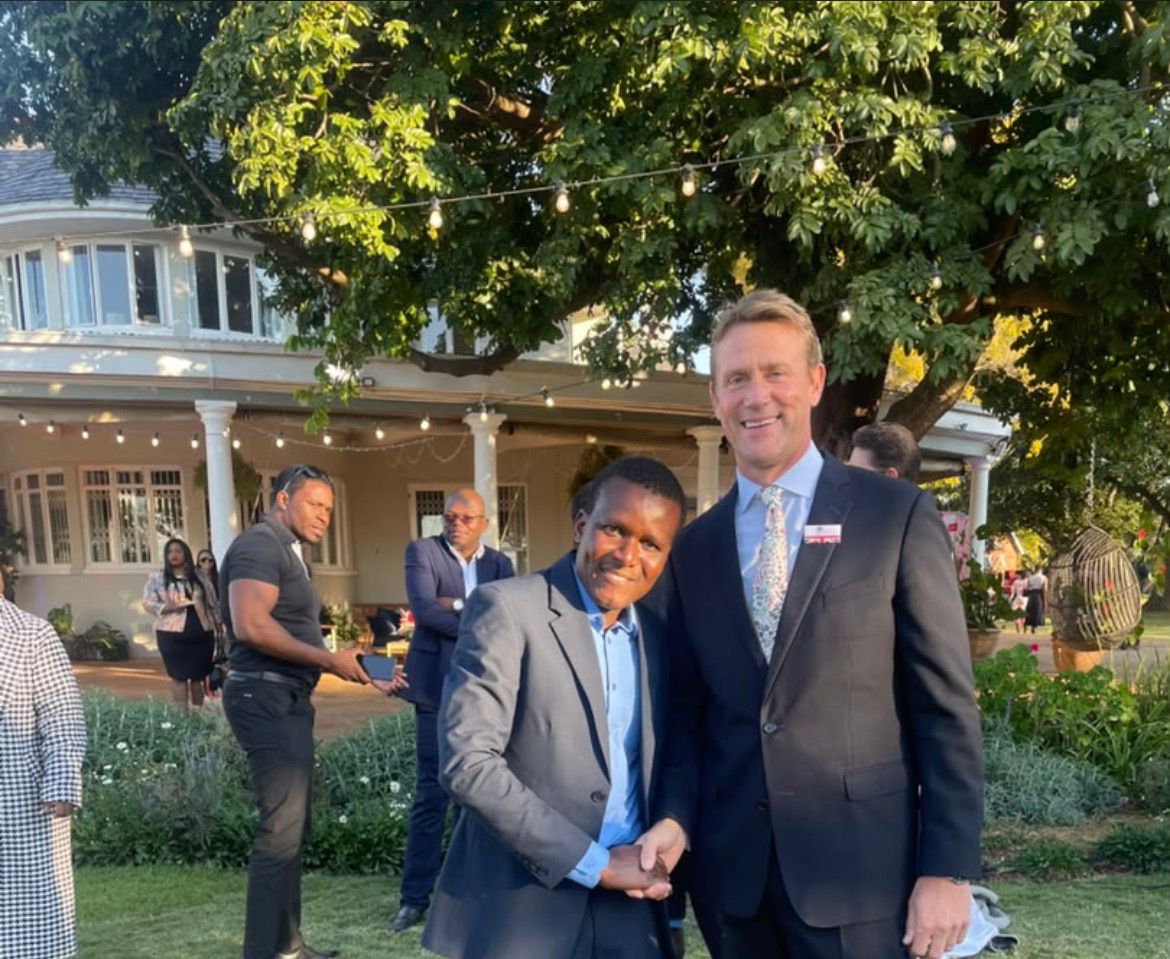
The 2026 Royal Affair was more than just a royal celebration; it was also an opportunity to bid farewell to Ambassador Pete, as he concluded his term of office in Zimbabwe, bringing to a close a remarkable chapter in his diplomatic contribution to our beautiful country, which, borrowing the Ambassador’s own words, “we are fortunate to know in different ways.”
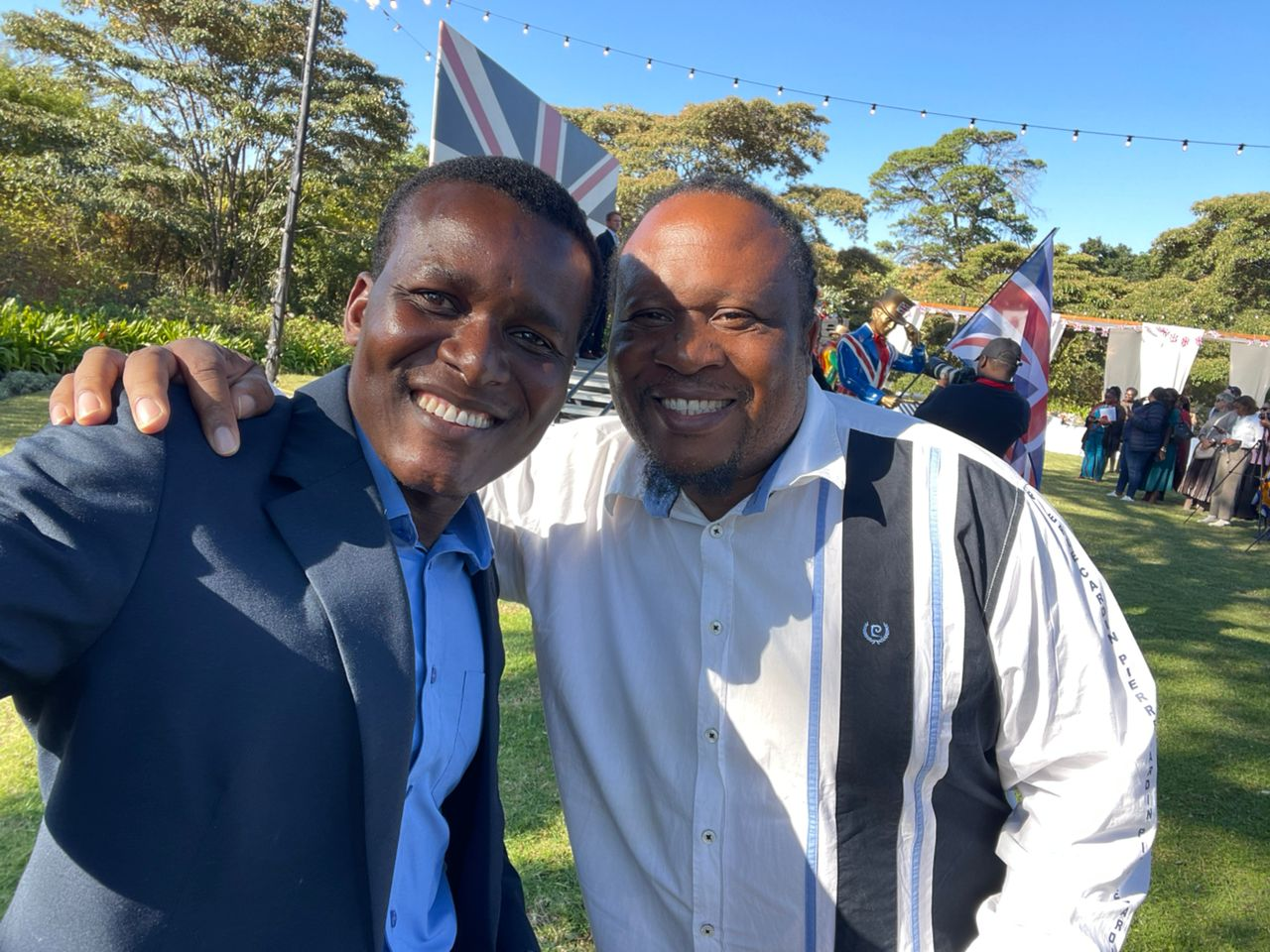
In attendance at the event were diplomats from various countries, Zimbabwean government officials and other distinguished guests from the business, civil society and political spheres. Among the highlights was the opportunity to meet, for the very first time, the most influential musician in my life, Karikoga Leonard Zhakata, affectionately known as Baba Chamu. Having grown up listening to his music, meeting him in person was both a memorable and deeply personal experience.
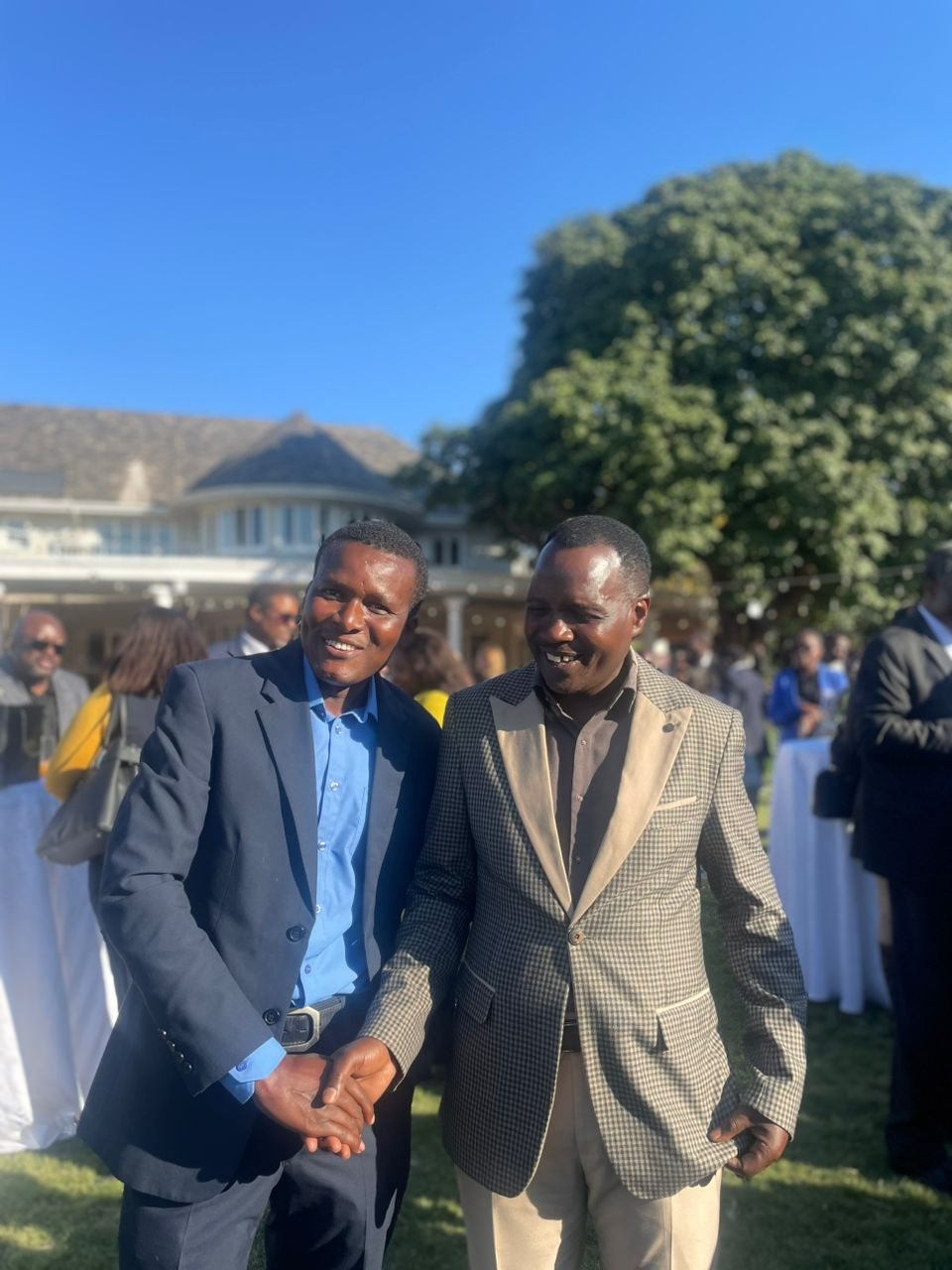
Interestingly, Leonard Zhakata’s music has touched Ambassador Pete deeply as well. During his speech, he recalled being introduced to Zhakata’s music in the 1990s, during the early years of his career in Zimbabwe, long before his ambassadorial posting to the country. From then on, he became attached to the music, which became part of his everyday life. This enduring connection was evident even in his speech at the King’s Birthday Party, where he made reference to two of Zhakata’s well-known musical messages: Nzombe huru yakabva mukurerwa (A mature ox comes from being nurtured) and Pane ziya pane dovi (Where there is sweat, there is peanut butter [the equivalent of Hard work brings rewards]).
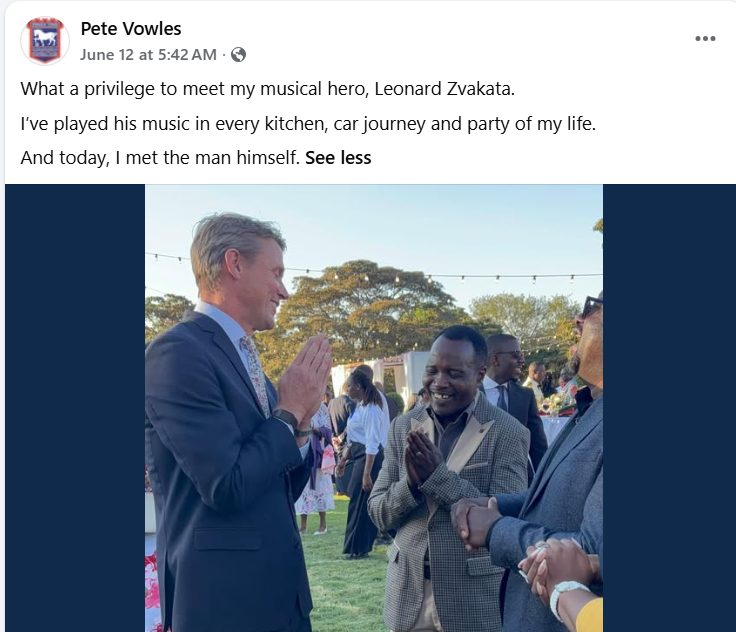
Zhakata’s musical message resonates with many people and aligns closely with efforts to transform lives and communities. At a personal level, his songs inspire and remind us that success is often the product of hard work, perseverance, resilience, patience, delayed gratification, integrity, hope and faith. Indeed, Upenyu mutoro (life is a burden or is burdensome), hopeka hadzina ndima mwachewe, wotozvipira kuita chero chinokupa kuguta iwe (sleep produces nothing, my dear; commit yourself to doing whatever is honest and noble to put food on the table). But kana iriyo raramiro yacho…. Tenzi ndepiwo Kundiso (If this is what surviving is, Lord, grant me the ability to overcome) or ndipeiwo Mugove wangu ndichirikurarama ([God,] Grant me my rightful portion while I am still alive). Zhakata’s songs also remind us that peace of mind in life comes from being content with what one has and not being greedy, envious or comparing oneself with others. Beyond the personal sphere, these messages carry important lessons for community development and social transformation.
At the event, I also bumped into John Mokwetsi, UNICEF Zimbabwe’s Digital Communications Officer, a Chevening Scholar and award-winning journalist. During my time at Great Zimbabwe University, I had the privilege of leading the design of the Bachelor of Science (Honours) in Rural Development programme, and meeting John at the King’s Birthday Party brought back memories of the valuable contributions he made to that programme, alongside Professor Ian Scoones of the Institute of Development Studies, University of Sussex, Norman Maoneni, a Town Planner from Chikomba Rural District Council, and numerous others. You can learn more about the programme here. Our conversation also took us down memory lane as we reminisced about his visits to my place at Stanmer Court during our Sussex days. I also took the opportunity to ask him that ‘question’ again, but despite our shared loyalty to Dynamos (Dembare) FC, John astutely avoided giving me a straight answer!
Beyond diplomacy: Development Lessons from Ambassador Pete Vowles’s Time in Zimbabwe
Ambassador Pete’s relationship with Zimbabwe can be traced back to the early 1990s, when he first arrived in the country as a teacher in rural Mudzi and later worked as a development practitioner. Listening to Ambassador Pete reflect on his experiences – at Embassy engagement events and in his conversation on DJ Olla’s podcast (see here), for example – and observing his approach in the field, three important development lessons stood out to me.
Immersion Is the Foundation of Effective Development: Professor Robert Chambers, in his seminal book Rural Development: Putting the Last First, warned against what he described as ‘development tourism’ – the tendency of development professionals to only make brief visits to communities, travelling on tarred/better roads, preferring the dry season, and assuming that they have understood local realities. Although I had long been familiar with this thinking through his writings, it was not until I participated in his participatory workshops at the Institute of Development Studies (Sussex) that I fully understood it and the value of immersion as a continuous practice in development work.
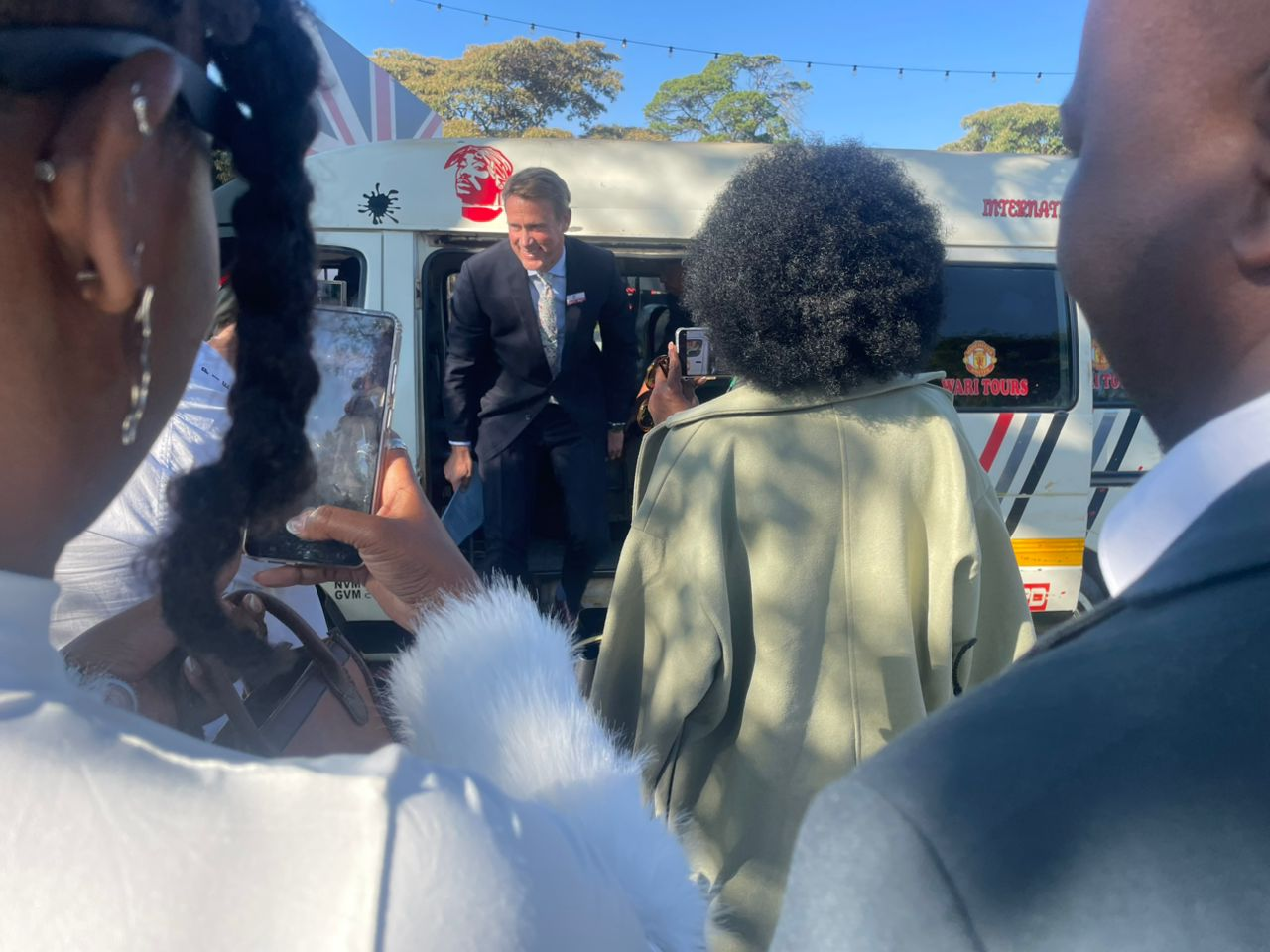
Ambassador Pete was neither a development tourist nor a diplomatic tourist. He made a deliberate effort to immerse himself in Zimbabwe’s diverse communities, travelling the length and breadth of the country. He embraced local ways of life: riding kombis (commuter minibuses) and conversing with fellow passengers, speaking local languages, particularly Shona, participating in communal activities, learning how peanut butter is made, socialising with people over hari yemadzisahwira (Chibuku, Zimbabwe’s iconic beer) and developing a genuine appreciation for Sungura music, one of Zimbabwe’s most iconic cultural expressions. More importantly, he invested time in listening to and engaging with people from all walks of life. These experiences enabled him to develop a deeper understanding of local realities, an essential foundation for identifying meaningful ways in which communities, governments and development actors can work together to improve people’s quality of life. In a fitting manner, he capped this commitment at his final King’s Birthday event in the country, arriving in a kombi to the sound of Sungura music and opening his speech in Shona. It is this authenticity, humility and willingness to immerse himself in Zimbabwean life that earned him the People’s Choice Award and the affection and respect of many Zimbabweans.
For development actors, the lesson is simple: meaningful development cannot be achieved from boardrooms, project vehicles or brief field visits. It requires continuous immersion in the lives, cultures and realities of the people that we seek to serve. By listening, learning and building genuine relationships with communities, development actors are better positioned to understand local priorities, earn community trust and co-create solutions that are relevant, inclusive and sustainable.
Development Must Be Rooted in Shared Responsibility: Another important insight I gained from Professor Robert Chambers’ famous participatory workshops was the concept of the ‘Uppers-Lowers’ relationship. The ‘Uppers’ are development professionals, policymakers and donors, while the ‘Lowers’ are communities or aid recipients. Conventionally, it is the ‘Uppers’ who determine what should be done in order to improve the lives of the ‘Lowers’. Chambers challenged this thinking, arguing that development is most effective when communities are recognised not as passive beneficiaries, but equal partners in identifying problems and shaping solutions. In a scholarly article, found here, which I prepared to contribute to global debates on poverty eradication ahead of the Second World Summit for Social Development (Doha 2025), I argued that the world remains off track to ending poverty by 2030. One of the reasons for this is the persisting top-down approaches that marginalise the voices and agency of those most affected by poverty. Ambassador Pete’s approach offered a different model. Rather than subscribing to the upper-lower mindset, he consistently engaged communities, institutions and the government as partners in development. His emphasis was not on prescribing solutions, but on listening, learning and co-creating responses to development challenges. In doing so, he demonstrated that sustainable development is not something done for people, but something achieved with people through shared responsibility, mutual respect and genuine partnership.
Moving Beyond Aid: Investment as the New Normal: The recent wave of aid cuts across the world (see here, here and here) has generated widespread concern, with many viewing it as a setback for development and poverty eradication efforts. Although aid remains important, particularly in addressing humanitarian needs and supporting vulnerable populations, experience on the ground increasingly points to the need for complementary and more sustainable pathways to development. This may be an opportune moment to revisit the arguments advanced by Baroness Dambisa Moyo in her book Dead Aid, which challenged conventional aid models and called for greater emphasis on investment, enterprise and economic transformation. Ambassador Pete’s engagement in Zimbabwe reflected this evolving thinking. Even as he continued to support grant-funded initiatives where appropriate, he placed increasing emphasis on trade, investment, innovation and mutually beneficial partnerships between Zimbabwe and the United Kingdom. His efforts supported investment not only at the national level but also in rural communities, recognising that sustainable poverty reduction ultimately depends on expanding economic opportunities, creating jobs and building productive capacities.
Even though Ambassador Pete’s diplomatic mission to Zimbabwe has now ended, these lessons remain relevant far beyond it.

Tinotenda. Siyabonga. Thank you, Ambassador Pete, for your contribution to Zimbabwe and for the many development lessons you have left us with. May the next chapter of your journey be filled with success and fulfilment.
 Blessing Gweshengwe PhD
Pingback: Beyond Remittances: What the 2026 Diaspora Week Reception Revealed About the Zimbabwean Diaspora’s Contribution to National Development – Blessing Gweshengwe PhD